A beautiful, thick, and intensely green lawn requires regular care and quick reactions to any appearing gaps. After winter, intensive use, or prolonged drought, thinning, dry patches, and areas completely devoid of turf often appear on the lawn. In such situations, professional grass overseeding works best, allowing you to quickly rebuild the aesthetics of the garden without having to establish a new lawn from scratch. Planting additional grass and overseeding grass after scarification is one of the most effective ways to regenerate damaged turf. In this article, you will learn how, thanks to a few simple treatments, you can effectively thicken an existing lawn, improve its resistance, and restore its former appearance.
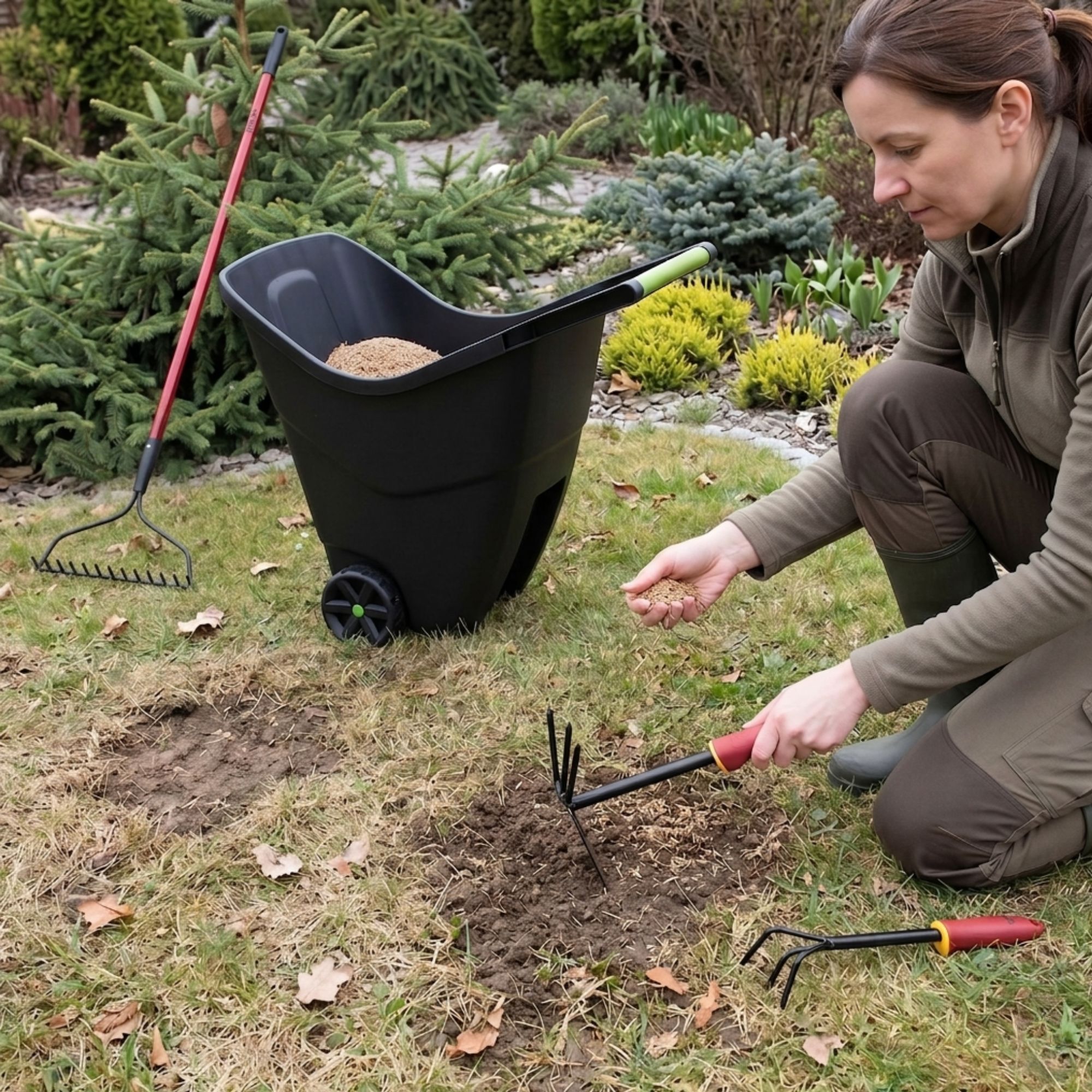
Many garden owners wonder when overseeding grass gives the best results. The most optimal time is spring and early autumn. During this period, the soil maintains a temperature of about 10–18°C, which promotes rapid seed germination and proper development of young blades.
Spring lawn regeneration allows for the repair of damage caused after winter. This is the best time for:
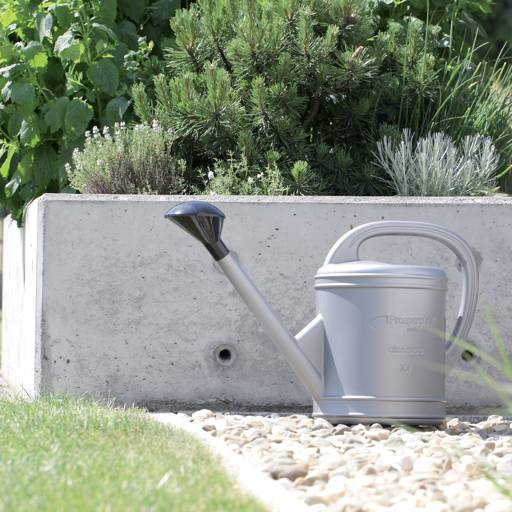
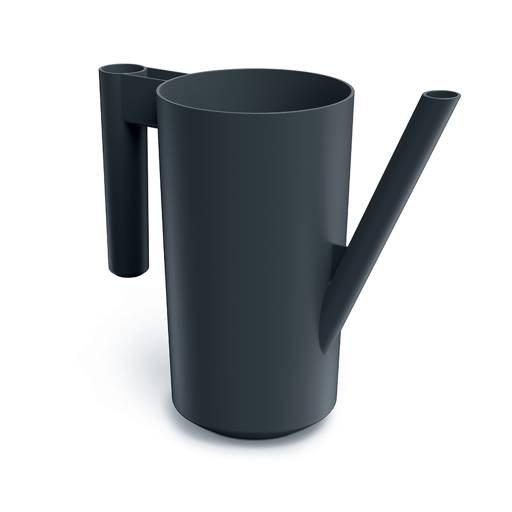
However, it should be remembered that young grass requires regular watering, especially during warmer days.
Scarification removes lingering thatch, moss, and dead plant fragments, improving air and water access to the roots. At the same time, this treatment may leave visible thinning. Therefore, overseeding grass after scarification is highly recommended and constitutes a natural stage of lawn regeneration. Loosened soil after scarification creates ideal conditions for the germination of new seeds, so the results are usually much better than during regular sowing.
Proper preparation of the substrate is the most important stage of the entire process. Overseeding grass on an existing lawn will only be effective if the seeds gain direct contact with the soil.
Removing thatch and moss
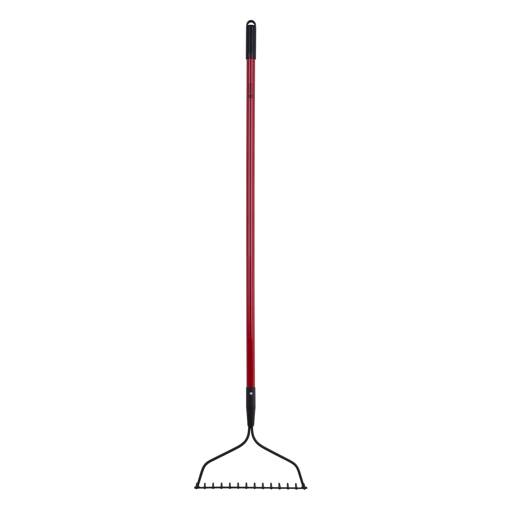
The first step should be a thorough raking of the old turf. Reliable Patio garden rake works great for removing:
In the case of heavily compacted soil, it is also worth performing a light aeration of the substrate.
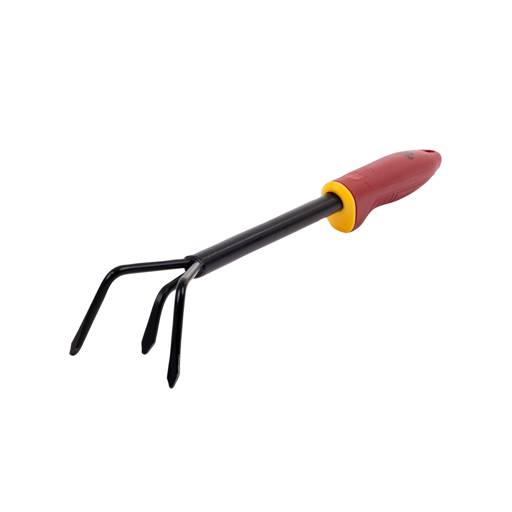
Point loosening of the soil in empty spots will be facilitated by a solid cultivator and a manual hoe. Gentle loosening improves:
Any organic waste is best collected using a spacious Load&Go Prosperplast garden wheelbarrow. The lightweight construction also facilitates the transport of fresh soil to level small depressions in the turf.
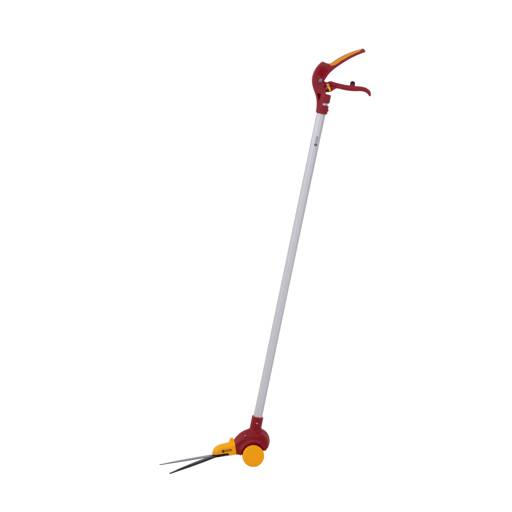
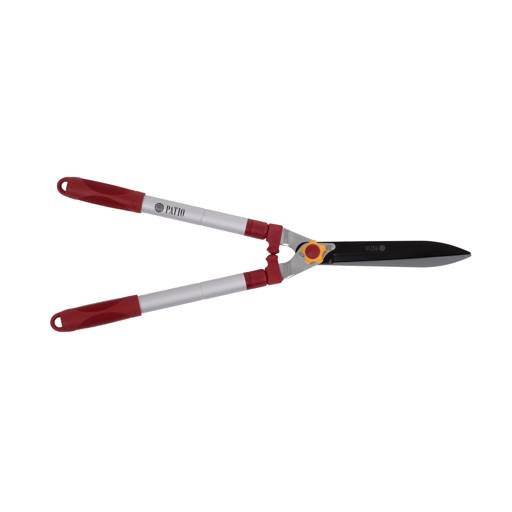
Old grass around empty spots can shade new sprouts. Therefore, it is worth mowing the lawn a bit lower than usual beforehand. Sharp Patio rotary grass shears will allow you to precisely level the edges of the gaps and improve light access to the young seedlings.
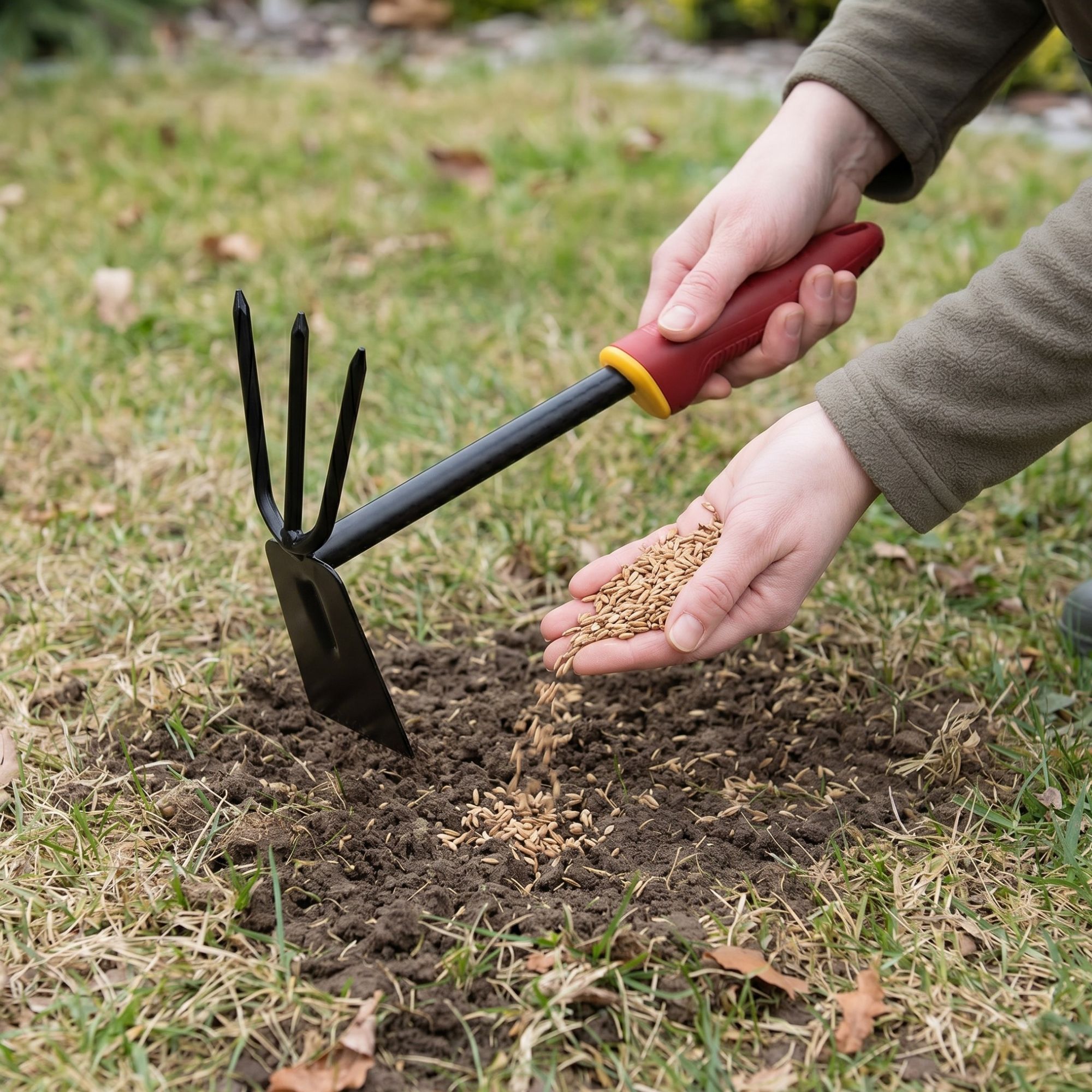
Choosing the right mixture has a huge impact on the effectiveness of lawn regeneration. The best grass for overseeding should be matched to both the soil type and the conditions in the garden. Different species will work on an intensively used lawn near the house, and others in shaded areas or those exposed to drying out. It is worth paying attention not only to the aesthetics of the turf, but also to the germination speed, resistance to mechanical damage, and the ability to thicken the existing lawn.
A well-chosen mixture allows for effective grass overseeding after scarification and quickly rebuilds gaps after winter or a hot summer. In the case of regenerating old turf, it is best to choose regeneration mixtures designed specifically for overseeding grass on an existing lawn. Such seeds usually germinate faster and integrate more easily with the older sod.
Recreational lawns, playgrounds, and home gardens intensively used by children or animals require exceptionally resistant grass species. In such places, perennial ryegrass, which is one of the most popular components of regeneration mixtures, works perfectly.
Perennial ryegrass stands out primarily for its very fast germination. The first blades can appear just a few days after sowing, thanks to which empty spots quickly regain their green appearance. This species tolerates frequent trampling and regular mowing well, which is why it works great on utility lawns.
An additional advantage of ryegrass is its ability to intensively thicken the turf. Thanks to this, planting additional grass brings quick results, and the lawn becomes more resistant to the formation of further gaps. However, it is worth remembering that ryegrass develops best in well-sunlit and regularly watered locations.
Places located under trees, near fences, or on the north side of buildings require the use of special mixtures that tolerate limited light access. In such conditions, standard grass species often germinate poorly, turn yellow, or thin out quickly.
For shaded parts of the garden, it is best to choose mixtures containing Kentucky bluegrass and red fescue. Bluegrass creates a dense and aesthetic turf while coping well in places with moderate sunlight. Red fescue, on the other hand, has finer blades and tolerates periodic light deficiencies very well.
Overseeding grass in the shade requires special care for the substrate moisture. The soil under trees is often very dry due to the extensive root system of the plants, so young seedlings need regular watering. It is also worth remembering to remove falling leaves, which can limit light access and hinder the growth of new turf.
Lawn regeneration on light, permeable soils can be much more difficult, especially during a hot summer. Sand loses moisture quickly, making young grass more vulnerable to drying out and weaker rooting. In dry and sandy areas, tall fescue works very well. This species has an exceptionally deep root system, which allows it to draw water from deeper soil layers. Thanks to this, the grass copes better during periodic droughts and high temperatures.
Tall fescue is also characterized by high resistance to intense sunlight and relatively low maintenance requirements. This makes it a frequent choice for grass overseeding in spring and the regeneration of lawns established on weaker soils.
In the case of a very permeable substrate, it is worth additionally applying a thin layer of fertile soil or compost before sowing the seeds. This treatment will improve moisture retention and significantly increase the germination efficiency of new blades.
Many gardeners type the phrase: how to do grass overseeding into a search engine, looking for an effective and simple way to regenerate turf. The most important thing is to maintain the correct order of work.
Step by step:
After sowing, it is extremely important to maintain constant substrate moisture. It is proper hydration that most often determines the success of the entire regeneration.
Young seedlings are very delicate and dry out quickly, therefore:
For storing tools, a practical garden accessory rack Corner Tool Rack Keter will come in handy, helping to keep the garage or gazebo tidy.
It is also worth remembering a few key parameters:
Does overseeding grass on an existing lawn really work?
Yes, provided the substrate is properly prepared. Seeds must have contact with the soil and be provided with adequate moisture.
Is it worth overseeding grass after scarification?
Yes, because scarification often reveals empty spots and loosens the substrate, creating ideal conditions for new seeds to germinate.
How often to water the lawn after overseeding?
Ideally twice a day with a gentle stream of water until strong blades appear.
When to do the first mowing after grass overseeding?
The first mowing should only be carried out when the new grass reaches a height of about 8–10 cm.
Can grass planting be done in summer?
In summer, regeneration is more difficult due to high temperatures and rapid soil drying. However, if necessary, very regular watering will be required.
When is grass overseeding done?
Grass overseeding is best done in spring or early autumn, when the soil is properly warmed and moisture conditions favor rapid seed germination.
Can you walk on sown grass?
You should not walk on sown grass until it is fully rooted and the first mowing has taken place, as young seedlings are very delicate and easily damaged.